Buy farmaciadelcarmine.pisa.it ?
We are moving the project
farmaciadelcarmine.pisa.it .
Are you interested in purchasing the domain
farmaciadelcarmine.pisa.it ?
domain@kv-gmbh.de · 0541-91531010
Buy farmaciadelcarmine.pisa.it ?
What are centimeters and Newtons?
Centimeters are a unit of measurement used to quantify length or distance in the metric system. One centimeter is equal to one hundredth of a meter. Newtons, on the other hand, are a unit of measurement used to quantify force in the International System of Units (SI). One Newton is defined as the force required to accelerate a one-kilogram mass by one meter per second squared. **
What is impact in Newtons?
Impact in Newtons refers to the force exerted by an object when it collides with another object. It is a measure of the amount of force applied during the collision. The impact force is typically measured in Newtons, which is the unit of force in the International System of Units (SI). The greater the impact force, the more forceful the collision between the objects. **
Similar search terms for Newtons
Top-Angebote
Products related to Newtons:
-
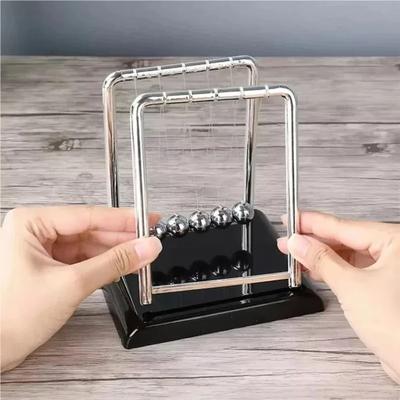
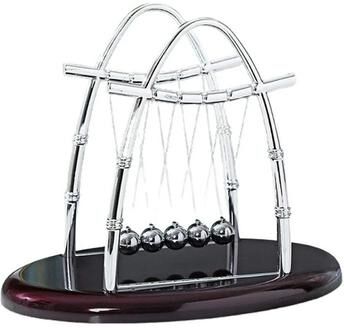
Inspire Curations Newtons Cradle Steel Balance Desk Toy Classic Physics Pendulum Decor Newtons Cradle Steel Balance Desk Toy Classic Physics Pendulum DecorBring motion, focus, and timeless curiosity to your workspace with this iconic Newtons cradle desk toy. Designed for both learning and relaxation, this elegant piece demonstrates the fascinating laws of physics while doubling as a stylish decor...40,00 $*Shipping: 0,00 $Secure redirect to the provider
-
Cornerstone Press Make Me Well: The Truth About the Wellness Industry, Supplements, and Personalised Health by Xand van TullekenIn a world of endless wellness advice, learn how to make smarter decisions about your health with the empowering new book from doctor and broadcaster Xand Van Tulleken. Drawing on original reporting, expert insight and real-world case studies, he explores: The truth about supplements and vitamins ― what works and what doesn’t The rise of at-home blood testing and personalised health plans How wearable technology (fitness trackers, sleep trackers, smartwatches) shapes our behaviour The promises and pitfalls of consumer genomics and DNA testing Why the line between healthcare and the wellness industry has become blurred There has never been a more confusing time to try to be healthy. From supplements and blood testing to wearable technology and consumer genomics, the modern wellness industry promises better energy, performance and longevity. But how much of it is science, and how much is marketing? In his groundbreaking book, Make Me Well, Xand van Tulleken investigates the new Wild West of the wellness industry, offering a clear, evidence-based guide to navigating today’s most popular health trends. With practical advice and accessible science, Make Me Well will help you cut through misinformation, avoid unnecessary costs, and make informed decisions about your physical and mental wellbeing. If you’ve ever wondered which health trends are worth your time and money, this is your essential guide to modern wellness.12,99 £*Shipping: 2,99 £Secure redirect to the provider
-
Uplift Curations Newtons Cradle Balance Ball Desk Toy Kinetic Energy Pendulum Decor & Science Gift Newtons Cradle Balance Ball Desk Toy Kinetic Energy Pendulum Decor & Science GiftBring motion, science, and calm into your workspace with this classic Newtons cradle desk toy. Designed with polished steel balls suspended in perfect alignment, it creates a mesmerizing swing that demonstrates real physics principles in action....42,50 $*Shipping: 0,00 $Secure redirect to the provider
-
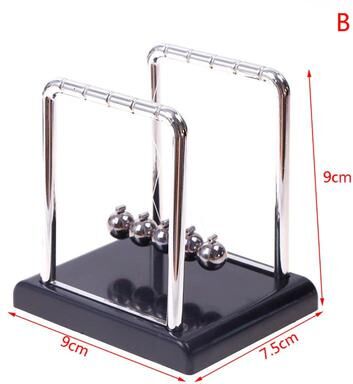
Inspired Finds Classic Newtons Cradle Desk Toy Newton's Cradle Desk Toy Steel Balance Balls Physics Decor Classic Newtons Cradle Desk Toy Newton's Cradle Desk Toy Steel Balance Balls Physics DecorBring motion, focus, and fascination to your workspace with this timeless Newton's cradle desk toy. Designed with polished steel balls, it creates a rhythmic, hypnotic movement thats both calming and educational. This physics pendulum toy...39,99 $*Shipping: 0,00 $Secure redirect to the provider


-
Are 700 Newtons 70 kilograms?
No, 700 Newtons is not equivalent to 70 kilograms. Newtons are a unit of force, while kilograms are a unit of mass. The relationship between the two is given by the equation F = ma, where F is the force in Newtons, m is the mass in kilograms, and a is the acceleration in meters per second squared. Therefore, 700 Newtons could be the force exerted by a 70-kilogram object under a certain acceleration, but they are not the same thing. **
-
How many Newtons correspond to 1 mm if 1 cm corresponds to 2 Newtons?
If 1 cm corresponds to 2 Newtons, then 1 mm corresponds to 0.2 Newtons. This can be calculated by dividing the Newton value for 1 cm (2 N) by 10, since there are 10 mm in 1 cm. Therefore, 2 N / 10 = 0.2 N. **
-
Why do scales not use Newtons?
Scales do not use Newtons as a unit of measurement because Newtons are a unit of force, not mass. Scales are designed to measure the mass of an object, which is the amount of matter in an object. Newtons, on the other hand, measure the force exerted on an object. Therefore, using Newtons to measure mass would be inaccurate and confusing. Instead, scales use units such as grams or kilograms to measure mass. **
-
How much is 600g in Newtons?
To convert 600g to Newtons, we can use the formula F = m * g, where F is the force in Newtons, m is the mass in kilograms, and g is the acceleration due to gravity (approximately 9.81 m/s^2). First, we need to convert 600g to kilograms by dividing by 1000, which gives us 0.6kg. Then, we can multiply 0.6kg by 9.81 m/s^2 to find the force in Newtons. Therefore, 600g is approximately equal to 5.886 Newtons. **

How do you convert kilograms to Newtons?
To convert kilograms to Newtons, you can use the formula F = m * g, where F is the force in Newtons, m is the mass in kilograms, and g is the acceleration due to gravity (approximately 9.81 m/s^2 on the surface of the Earth). Simply multiply the mass in kilograms by the acceleration due to gravity to get the force in Newtons. For example, if you have a mass of 10 kilograms, the force in Newtons would be 10 kg * 9.81 m/s^2 = 98.1 N. **
How do I convert kilograms to Newtons?
To convert kilograms to Newtons, you can use the formula F = m * g, where F is the force in Newtons, m is the mass in kilograms, and g is the acceleration due to gravity (approximately 9.81 m/s^2 on the surface of the Earth). Simply multiply the mass in kilograms by the acceleration due to gravity to find the force in Newtons. For example, if you have a mass of 5 kilograms, you would multiply 5 kg by 9.81 m/s^2 to get 49.05 N. **
Top-Angebote
Products related to Newtons:
-
Uplift Picks Newtons Cradle Desk Toy Steel Ball Balance Pendulum Decor Newtons Cradle Desk Toy Steel Ball Balance Pendulum DecorBring focus and fascination to your workspace with this classic newtons cradle desk toy. Designed to demonstrate motion and energy transfer, this elegant balance ball pendulum offers both visual appeal and educational value. With its smooth swinging...26,48 $*Shipping: 0,00 $Secure redirect to the provider
-
Uplift Picks Metal Newtons Cradle Pendulum Desk Toy Educational Physics Balance Balls Metal Newtons Cradle Pendulum Desk Toy Educational Physics Balance BallsBring science to life right on your desk with this classic Newtons cradle desk toy that blends education and relaxation. Featuring polished steel balls suspended in perfect balance, this metal pendulum balance ball demonstrates the principles of...52,98 $*Shipping: 0,00 $Secure redirect to the provider
-
Inspire Curations Newtons Cradle Steel Balance Desk Toy Classic Physics Pendulum Decor Newtons Cradle Steel Balance Desk Toy Classic Physics Pendulum DecorBring motion, focus, and timeless curiosity to your workspace with this iconic Newtons cradle desk toy. Designed for both learning and relaxation, this elegant piece demonstrates the fascinating laws of physics while doubling as a stylish decor...40,00 $*Shipping: 0,00 $Secure redirect to the provider
-
Cornerstone Press Make Me Well: The Truth About the Wellness Industry, Supplements, and Personalised Health by Xand van TullekenIn a world of endless wellness advice, learn how to make smarter decisions about your health with the empowering new book from doctor and broadcaster Xand Van Tulleken. Drawing on original reporting, expert insight and real-world case studies, he explores: The truth about supplements and vitamins ― what works and what doesn’t The rise of at-home blood testing and personalised health plans How wearable technology (fitness trackers, sleep trackers, smartwatches) shapes our behaviour The promises and pitfalls of consumer genomics and DNA testing Why the line between healthcare and the wellness industry has become blurred There has never been a more confusing time to try to be healthy. From supplements and blood testing to wearable technology and consumer genomics, the modern wellness industry promises better energy, performance and longevity. But how much of it is science, and how much is marketing? In his groundbreaking book, Make Me Well, Xand van Tulleken investigates the new Wild West of the wellness industry, offering a clear, evidence-based guide to navigating today’s most popular health trends. With practical advice and accessible science, Make Me Well will help you cut through misinformation, avoid unnecessary costs, and make informed decisions about your physical and mental wellbeing. If you’ve ever wondered which health trends are worth your time and money, this is your essential guide to modern wellness.12,99 £*Shipping: 2,99 £Secure redirect to the provider
-
What are centimeters and Newtons?
Centimeters are a unit of measurement used to quantify length or distance in the metric system. One centimeter is equal to one hundredth of a meter. Newtons, on the other hand, are a unit of measurement used to quantify force in the International System of Units (SI). One Newton is defined as the force required to accelerate a one-kilogram mass by one meter per second squared. **
-
What is impact in Newtons?
Impact in Newtons refers to the force exerted by an object when it collides with another object. It is a measure of the amount of force applied during the collision. The impact force is typically measured in Newtons, which is the unit of force in the International System of Units (SI). The greater the impact force, the more forceful the collision between the objects. **
-
Are 700 Newtons 70 kilograms?
No, 700 Newtons is not equivalent to 70 kilograms. Newtons are a unit of force, while kilograms are a unit of mass. The relationship between the two is given by the equation F = ma, where F is the force in Newtons, m is the mass in kilograms, and a is the acceleration in meters per second squared. Therefore, 700 Newtons could be the force exerted by a 70-kilogram object under a certain acceleration, but they are not the same thing. **
-
How many Newtons correspond to 1 mm if 1 cm corresponds to 2 Newtons?
If 1 cm corresponds to 2 Newtons, then 1 mm corresponds to 0.2 Newtons. This can be calculated by dividing the Newton value for 1 cm (2 N) by 10, since there are 10 mm in 1 cm. Therefore, 2 N / 10 = 0.2 N. **
Similar search terms for Newtons
-
Uplift Curations Newtons Cradle Balance Ball Desk Toy Kinetic Energy Pendulum Decor & Science Gift Newtons Cradle Balance Ball Desk Toy Kinetic Energy Pendulum Decor & Science GiftBring motion, science, and calm into your workspace with this classic Newtons cradle desk toy. Designed with polished steel balls suspended in perfect alignment, it creates a mesmerizing swing that demonstrates real physics principles in action....42,50 $*Shipping: 0,00 $Secure redirect to the provider
-
Inspired Finds Classic Newtons Cradle Desk Toy Newton's Cradle Desk Toy Steel Balance Balls Physics Decor Classic Newtons Cradle Desk Toy Newton's Cradle Desk Toy Steel Balance Balls Physics DecorBring motion, focus, and fascination to your workspace with this timeless Newton's cradle desk toy. Designed with polished steel balls, it creates a rhythmic, hypnotic movement thats both calming and educational. This physics pendulum toy...39,99 $*Shipping: 0,00 $Secure redirect to the provider
-
Inspire Curations Newtons Cradle Kinetic Desk Toy Perpetual Motion Balance Ball Decor tAdd a touch of science, motion, and relaxation to your workspace with this classic newtons cradle desk toy. Designed to demonstrate the fascinating principles of motion and energy transfer, it creates a mesmerizing swinging effect thats both calming...145,50 $*Shipping: 0,00 $Secure redirect to the provider
-
Inspire Essentials Newtons Cradle Desk Decor Metal Balance Ball Physics Pendulum Toy bAdd a touch of calm focus and timeless curiosity to your space with this newtons cradle desk toy designed to blend science and style. With each gentle swing, it creates a soothing rhythm that captures attention and sparks fascination. Perfect for...59,50 $*Shipping: 0,00 $Secure redirect to the provider
-
Why do scales not use Newtons?
Scales do not use Newtons as a unit of measurement because Newtons are a unit of force, not mass. Scales are designed to measure the mass of an object, which is the amount of matter in an object. Newtons, on the other hand, measure the force exerted on an object. Therefore, using Newtons to measure mass would be inaccurate and confusing. Instead, scales use units such as grams or kilograms to measure mass. **
-
How much is 600g in Newtons?
To convert 600g to Newtons, we can use the formula F = m * g, where F is the force in Newtons, m is the mass in kilograms, and g is the acceleration due to gravity (approximately 9.81 m/s^2). First, we need to convert 600g to kilograms by dividing by 1000, which gives us 0.6kg. Then, we can multiply 0.6kg by 9.81 m/s^2 to find the force in Newtons. Therefore, 600g is approximately equal to 5.886 Newtons. **
-
How do you convert kilograms to Newtons?
To convert kilograms to Newtons, you can use the formula F = m * g, where F is the force in Newtons, m is the mass in kilograms, and g is the acceleration due to gravity (approximately 9.81 m/s^2 on the surface of the Earth). Simply multiply the mass in kilograms by the acceleration due to gravity to get the force in Newtons. For example, if you have a mass of 10 kilograms, the force in Newtons would be 10 kg * 9.81 m/s^2 = 98.1 N. **
-
How do I convert kilograms to Newtons?
To convert kilograms to Newtons, you can use the formula F = m * g, where F is the force in Newtons, m is the mass in kilograms, and g is the acceleration due to gravity (approximately 9.81 m/s^2 on the surface of the Earth). Simply multiply the mass in kilograms by the acceleration due to gravity to find the force in Newtons. For example, if you have a mass of 5 kilograms, you would multiply 5 kg by 9.81 m/s^2 to get 49.05 N. **
* All prices are inclusive of VAT and, if applicable, plus shipping costs. The offer information is based on the details provided by the respective shop and is updated through automated processes. Real-time updates do not occur, so deviations can occur in individual cases. ** Note: Parts of this content were created by AI.